Blog
Insights on email-native learning, productivity, and skill development
Tutorial Hell Is Not a Benchmark
Tutorial Hell Is Not a Benchmark
Published: October 2, 2026
Tags: Tutorial Hell, Learn to Code, Self-Taught Developer, Certification, PHP
The 43-Hour Problem
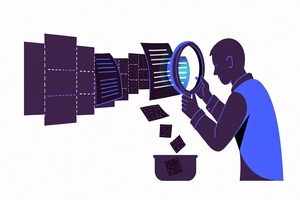
A developer writing on freeCodeCamp described their first year of learning to code like this: they bought a 43-hour web development bootcamp and watched all of it. Then — because finishing it didn't leave them feeling ready — they bought a second course, 30 hours long, covering mostly the same topics. Months of watching. Hundreds of hours of "learning." And at the end of it, they still didn't feel prepared to build anything on their own.
If that story stings a little, it's because it's common enough to have a name: tutorial hell — sometimes called tutorial purgatory. You watch one course, then another, then another. Each one makes sense while it's playing. The instructor's code is clean, the explanations are clear, and you finish every video with the warm feeling of a productive evening.
It feels like progress. It isn't — at least, not the kind you can prove.
Here's the uncomfortable arithmetic: hours watched is a measure of consumption, not competence. A playlist doesn't certify anything. And the reason so many self-taught developers stay in the loop isn't laziness or lack of talent — it's that tutorials are safe. Nobody can fail a video. There's no score, no timer, no moment where the instructor stops talking and you find out what you actually retained.
Which raises the question tutorial hell exists to avoid: have you ever tested yourself cold?
The Promise of a Real Benchmark
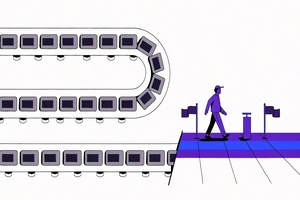
Imagine the opposite of tutorial hell. Not "watching one more course to be sure," but sitting down, cold, and finding out — in one timed session — exactly where your PHP knowledge stands.
That's what a benchmark gives you, and it's worth being precise about what it unlocks:
- Evidence instead of hope. Walking into a technical interview or a portfolio review with a verified score is a different posture entirely from walking in hoping your study hours were enough.
- A map of your gaps. A benchmark doesn't just say pass or fail — it shows you which domains held up and which quietly evaporated after the video ended.
- An exit ramp from the loop. The most common driver of tutorial hell is uncertainty: I'm not ready yet, so I'll watch one more course. A benchmark replaces that vague dread with a number you can act on.
- Calibrated confidence. Confidence backed by evidence survives an interviewer's follow-up question. Confidence backed only by consumption tends to collapse at the first curveball.
This isn't about gatekeeping. Nobody needs permission to call themselves a developer. But there's a real difference between believing you know something and having demonstrated it under conditions where belief doesn't matter.
Why Self-Assessment Without a Benchmark Fails
"Fine," you might say, "but I don't need an exam. I know whether I've learned something." That's the most dangerous sentence in self-directed learning — and there's peer-reviewed evidence for exactly why.
In 2006, psychologists Henry Roediger and Jeffrey Karpicke published a landmark study in Psychological Science on what's now called the testing effect. Students studied prose passages, then either restudied the material or took free-recall tests on it — no feedback, just retrieval. At a test five minutes later, the restudiers did fine. But when the real retention test came days later, the pattern inverted hard: students who had been tested remembered substantially more than students who had restudied.
Here's the part that should worry every serial course-taker: the restudying group wasn't just less prepared — they were more confident. Repeated studying inflated their belief that they'd remember, while testing — which felt harder and less pleasant — was what actually built durable retention. Feeling prepared and being prepared decoupled, measurably, in a lab.
Tutorial hell is that experiment scaled up to a lifestyle. Rewatching is restudying. It feels productive, it raises your confidence, and it does very little for what you'll produce when the video is off.
Florian Walther of Coding in Flow describes the moment this gap becomes visible: "When you watch the instructor explain, it all seemingly makes sense. But when you then try to write some code yourself, you don't know what to do." Even taking notes doesn't save you — "when you close the tutorial and try to do it yourself, you go blank." His analogy is blunt: you can't learn to swim by watching someone else do it.
And the fixes proposed by people who've escaped are telling. Software engineer Aleksandr Hovhannisyan argues tutorials should be used "like an answer key on an exam" — consulted after you've made your own attempt, never before. Read that again. The standard advice for escaping tutorial hell is, literally, to reorder your learning around a verification-first model: attempt, check, correct. The tutorial becomes the answer key — which raises an obvious question. If you're meant to attempt first and check second... when do you attempt?
For most self-taught developers, the honest answer is never in a way that counts. No timer. No stakes. No score. Just vibes.
That is the gap a benchmark fills. The PHP 8.4 Foundation exam is free — 30 questions, a timer, a score you cannot negotiate with. Attempt first, check second, exactly as advised.
What a Real Benchmark Actually Measures
So what does sitting a real assessment look like — and why can't a weekend of tutorials substitute for it?
A proper benchmark exam is the structural opposite of a tutorial. It's timed — no pause button, no rewinding to re-hear the explanation. There's no instructor whose code you can copy while telling yourself you'd have written it anyway. And the questions span the actual domain — not the comfortable 20% of it you use every day, but the whole surface: syntax, data structures, control flow, functions, error handling, the features that separate "I've seen this" from "I can use this."
Take the PHP 8.4 Foundation exam on ProvedExpert. It doesn't ask what you've watched. It asks what you can do cold — across the language's core domains, under a clock, with a defined pass mark. Thirty questions, sixty minutes, and an honest answer at the end of it. It's free, which means the only thing it costs is the comfort of not knowing.
That's the deeper point: the exam isn't just measuring knowledge — it's measuring knowledge under retrieval, which per Roediger and Karpicke is the only kind that reliably survives contact with a deadline, an interview, or a production incident. A tutorial can put information in front of you. Only a benchmark can tell you what stayed.
And if you're reading this thinking Foundation sounds too easy for me — good. That's exactly the kind of claim a benchmark exists to settle. The PHP 8.4 Professional exam is one level up, aimed at developers who believe they're past the basics. Prove it or learn otherwise; either outcome is cheaper than finding out in an interview.
Fix the Loop, Then Find Out
None of this means tutorials are worthless — even their harshest critics concede they have a role. The failure mode was never watching them; it's watching them as a substitute for verification rather than an input to it. Escape comes from restructuring how you learn: deliberate practice, real attempts, and honest measurement of the result.
If the structure is what's broken, fix the structure. CourseThread's Async-First Productivity email course covers exactly that — time blocking, deep work, and designing your week so learning time produces output instead of just hours logged. Learn deliberately, then prove it. The pairing is the point: structure the learning on one side, verify the skill on the other.
You've Watched Enough
Somewhere between the first course and the fifth, every self-taught developer has to answer the question tutorials exist to postpone: do I actually know this?
You already suspect the answer, or you'd have stopped watching by now. The only way to replace suspicion with certainty — in either direction — is to measure it. Not someday. Now, while "I wonder if I'd pass" is still a question instead of a regret.
Take the free PHP 8.4 Foundation exam and find out where you stand →
Keep Reading
Explore more practical guides and insights to stay ahead of contract review best practices.